
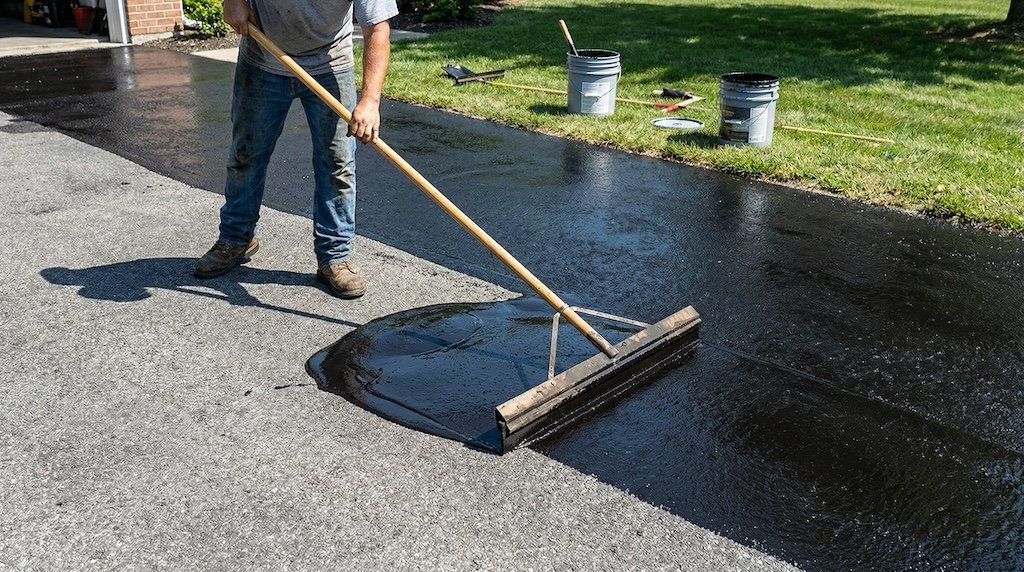
Sealcoating is the cheapest, highest-return maintenance you can do on a parking lot. But like anything, you can overdo it. Seal too often and you are spending money you did not need to. Wait too long and the surface starts to break down faster than a coat of sealant can protect it. So what is the right interval for a lot in the Bakken?
The short answer
For most commercial lots in northwest North Dakota, every two to three years is a sensible rhythm. That range covers most properties, but the right number for your lot depends on a few things.
What pushes the interval shorter
Some lots need it closer to every two years, or even sooner in spots:
- Heavy traffic. A busy retail lot, a truck yard, or anywhere with constant turning and braking wears the surface faster than a low-use lot.
- Sun exposure. Big open lots with no shade take the full brunt of UV, which dries asphalt out and fades it to gray.
- Oil and fuel. Drips and spills break down asphalt binder. Lots that see a lot of equipment or fueling need protection more often.
- Standing water. If part of the lot drains poorly, that area ages faster and needs attention sooner.
What lets you stretch it
A newer lot in good shape, with light traffic and decent drainage, can often go the full three years between coats. A well-maintained surface that gets its cracks sealed on time also holds up longer, because the damage that ages pavement fastest is water getting into the base.
Why timing matters here specifically
Our climate is hard on pavement. Every fall, any crack or dried-out, raveling surface is an open door for water, and every winter that water freezes and pries the asphalt apart. Sealcoating before that cycle starts keeps the surface tight and flexible so water stays out. A lot that goes into winter sealed and crack-free comes out the other side in far better shape than one that did not.
That is also why we usually recommend sealing in the warm, dry stretches of the season. Sealant needs heat and dry time to cure properly, and our window for that is not long.
Crack sealing comes first
One thing worth being clear about: sealcoat protects the surface, but it does not bridge cracks. If your lot has cracks, those get routed and filled first, then sealed over. Skipping that step means water keeps getting into the base under a fresh-looking coat, and the lot fails from underneath while it still looks fine on top.
The easiest way to know
Honestly, the best way to land on the right interval is to have someone look at the lot. A surface that is fading, raveling, or showing the first hairline cracks is telling you it is time. One that is still black and tight can wait.
That is what a maintenance plan is for: a scheduled look at the lot so sealing and crack filling happen on time, before small issues turn into expensive ones. If you want us to assess your lot and lay out a sensible schedule, reach out and we will take a look.