
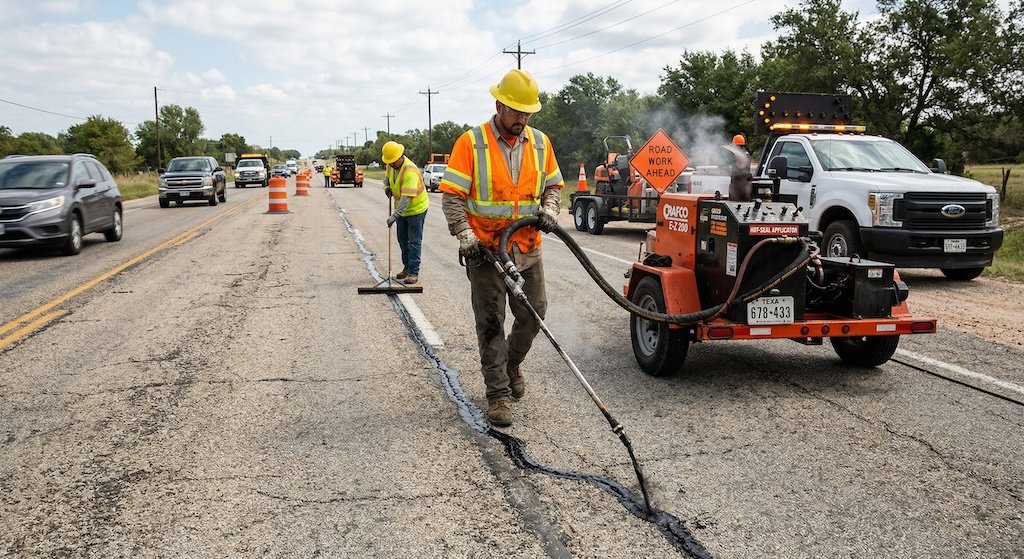
A crack in your driveway or lot looks like a small, cosmetic thing. It is not. Of all the ways pavement fails out here, water getting into the base is the most common, and an open crack is the door it walks through. Sealing that door is the cheapest, highest-return maintenance you can do. Here is why.
How a thin crack becomes a pothole
Follow the chain. A crack opens in the surface. Rain and snowmelt run down into it and reach the base, the compacted layer that holds everything up. Then a North Dakota winter does what it does: the water freezes, expands, and pushes the pavement apart from the inside. Thaw comes, the water drains deeper, and the next freeze pushes harder.
Do that over and over through a winter and the crack widens, the edges break down, the base gets soft, and what started as a hairline becomes spalling, then a pothole, then a section that has to be rebuilt. The crack did not cause the pothole on its own. Water plus freeze-thaw did, and the crack let them in.
Why sealing is such a good deal
Crack sealing is cheap, and what it prevents is expensive. Routing and filling cracks costs a small fraction of patching potholes or rebuilding a failed section. You are spending a little now to avoid spending a lot later. Few things in property maintenance have that kind of return.
It also protects everything else you have invested in the pavement. A good sealcoat protects the surface, but it does not bridge cracks, so sealing without first dealing with cracks leaves the real problem open underneath. Crack sealing first, then sealcoat over the top, is the right order.
How it’s actually done
There is more to it than squirting filler in a gap. We rout the crack to a clean, consistent profile so the sealant has something to hold onto, blow it clean so the fill bonds to bare asphalt instead of dirt, and then apply sealant that stays flexible. Done right, it seals the crack and moves with the pavement instead of popping back out.
Timing: before winter is best
The ideal time to seal cracks is before winter, so water cannot get in and freeze in the first place. That said, sealing a crack any time it appears is better than letting it run. The worst thing you can do is watch a crack widen for a season or two and then deal with the pothole.
One honest limit
Crack sealing protects sound pavement with isolated cracks. It is not a fix for a surface that is already crumbling or alligatored across a whole area. Once it gets to that stage, the base has usually failed, and the answer is patching or resurfacing, not sealant. We will tell you which one you are looking at rather than selling you a seal that will not hold.
The takeaway
If you take one piece of pavement maintenance seriously, make it this one. Sealing cracks on time, especially before winter, is the single cheapest thing you can do to keep a driveway or lot from failing early. If you want us to look at yours and get ahead of it, get in touch.