
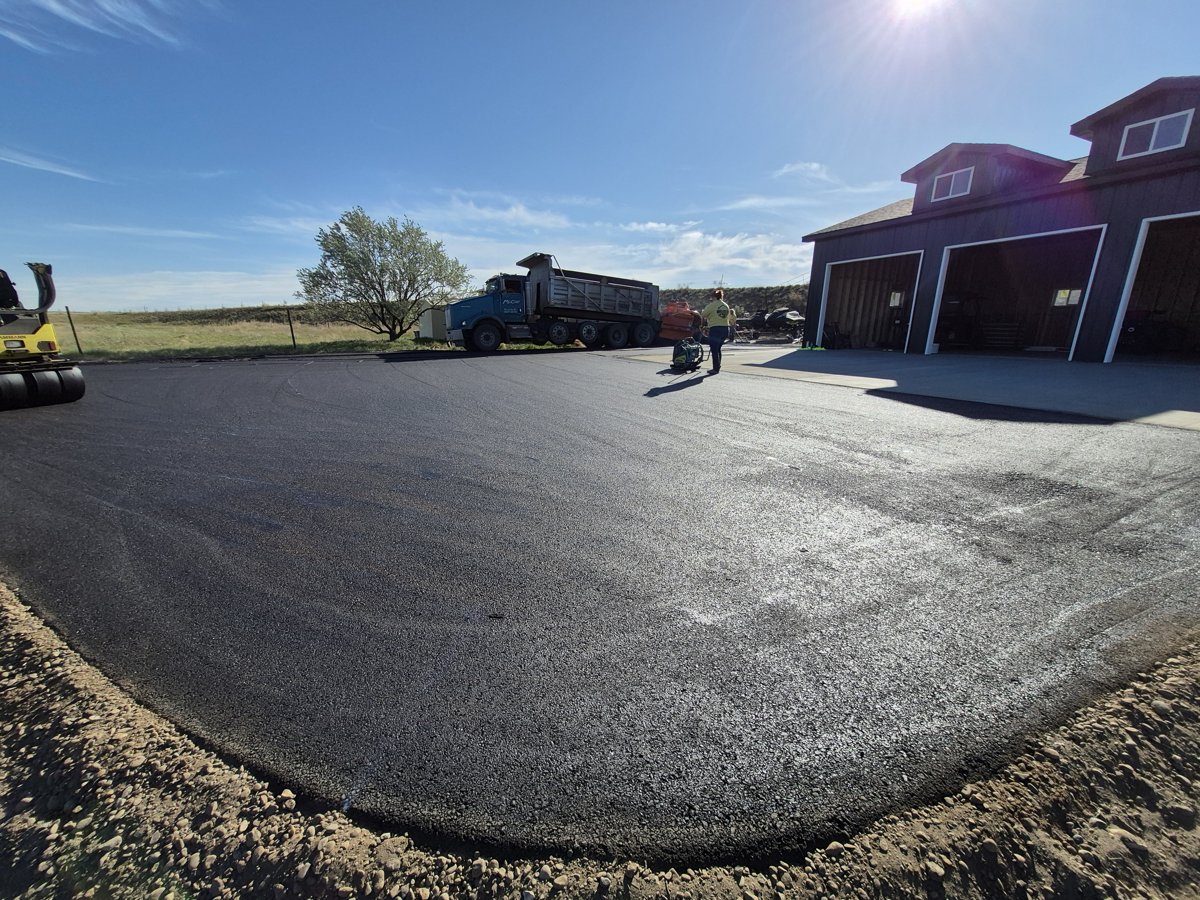
If you are planning to pave this year, timing is not a small detail out here. Northwest North Dakota gives us a short window to lay asphalt well, and the difference between paving in that window and pushing it to the edges shows up in how long the surface lasts. Here is how the season works.
Asphalt is laid hot, and it needs warmth to compact
Hot mix asphalt goes down hot and has to be compacted before it cools. When the ground and the air are warm, the mix stays workable long enough to roll it tight, and tight compaction is what gives pavement its strength and life. When it is cold, the mix stiffens too fast, you lose compaction, and the surface never reaches the density it should. That is the core reason paving has a season.
The sweet spot: late spring through early fall
Around Williston, the reliable paving window runs from roughly late spring, once the ground has thawed and dried out, through early fall, before nights turn cold for good. Inside that window, the warm and dry stretches of summer are ideal. Dry ground compacts better, and warm days give the crew time to work the mix and finish it right.
Early spring can be tricky. The ground is still coming out of frost and holding moisture, and a soft, wet base is a bad foundation no matter how good the asphalt on top is. Late fall is the other edge: once nights get cold, the mix cools too fast to compact well.
Why the calendar fills up so fast
Because the good window is short, demand stacks into it. Everyone who wants paving done wants it done in the same few warm months. By mid to late summer, our schedule is usually filling, and the hottest, driest stretches book first because they are the best conditions.
The practical takeaway: if you want work done this year, get on the schedule early. Calling in spring to plan a summer install is the way to make sure you land a spot in the right conditions rather than getting squeezed to the cold edges of the season.
Plan the prep, not just the paving
A lot of paving jobs need base work first: excavation, grading for drainage, and compaction. That prep takes time, and it has to be right before any asphalt goes down. If you are building a shop, putting in a new approach, or redoing a driveway, planning the prep ahead means we can pave as soon as conditions are good instead of starting the clock late.
What about repairs and maintenance?
New paving is the most weather-sensitive work. Maintenance has a bit more flexibility, but it follows the same logic. Crack sealing is best done before winter so water cannot get in and freeze. Sealcoating needs warm, dry conditions to cure. So the warm season is busy for those too.
Bottom line
The best time to pave around here is the warm, dry heart of the season, and the best time to call about it is well before then. If you have a project in mind for this year, get an estimate on the calendar early and we will help you plan it for the right conditions.